
🚀 From WebSockets to AI Agents: Building chatmesh (and Breaking It on Purpose)
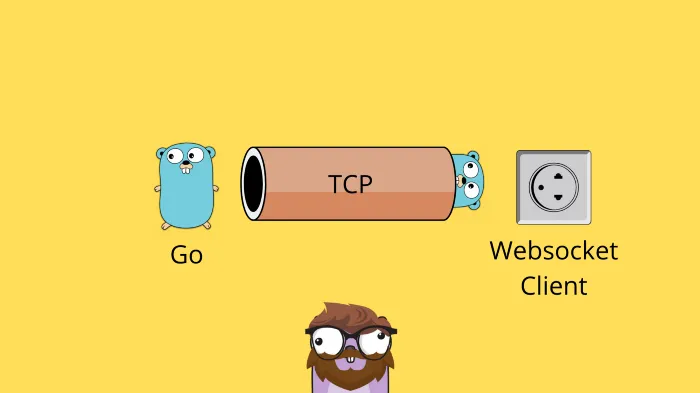
Most developers build features. I wanted to build systems. So instead of another CRUD app, I started building a real-time chat backend in Go—something simple on the surface, but brutal underneath.
👉 Repo: chatmesh on GitHub
(Yes, I intentionally picked something that would break once it scales.)
🧠 Why chat?
Because chat forces you to deal with problems most apps avoid:
Persistent connections (WebSockets)
Concurrency
State management
Real-time delivery
Horizontal scaling
It’s not just “send message → receive message.”
It’s:
“What happens when 1,000 users connect across 5 servers?”
⚙️ Phase 1 — Everything Works (and That’s the Problem)
I built a single-node WebSocket server in Go.
Each connection:
has a read loop
has a write loop
communicates via channels
A central hub:
tracks clients
manages rooms
broadcasts messages
And guess what?
It worked perfectly.
That’s the trap.
💥 Phase 2 — Add One More Server (Everything Breaks)
I introduced:
multiple instances
a load balancer
Now:
User A → Server 1
User B → Server 2
Messages stopped syncing.
Nothing crashed.
But the system was fundamentally broken.
🔥 The Core Problem
WebSockets are stateful.
That means:
connections live inside a specific server
memory is not shared
load balancers are blind to connection state
So scaling horizontally causes:
fragmented reality
🧠 Phase 3 — Thinking Like a Systems Engineer
The fix wasn’t “better code.”
It was:
change how the system communicates
I introduced a Pub/Sub layer (Redis).
Now:
Client → Server → Pub/Sub → All Servers → Clients
Each instance:
publishes messages
subscribes to events
broadcasts locally
Now the system:
scales horizontally
stays consistent
behaves like one system
⚡ The Shift
At this point, chatmesh stopped being “a chat app.”
It became:
a real-time event system
a distributed messaging layer
a foundation for something bigger
🤖 Why This Matters for AI Agents
Modern AI systems aren’t just models.
They’re systems that:
communicate in real-time
maintain shared state
coordinate actions
stream responses
That’s exactly what this architecture enables.
Your “chat backend” becomes:
an AI agent communication layer
🧩 What’s Next for chatmesh
The roadmap:
✅ WebSocket real-time layer
⏳ Redis Pub/Sub (scaling)
⏳ Streaming LLM responses
⏳ Tool execution layer
⏳ Agent memory (vector DB / Redis)
⏳ Multi-agent coordination
🧠 Lessons Learned
1. Working locally means nothing
Single-node success is misleading.
2. Scaling is not an add-on
It changes your architecture completely.
3. State is your biggest enemy
Especially when it’s in memory.
4. Distributed systems = communication problems
Not coding problems.
5. Build things that break
That’s where real learning happens.
🚀 Final Thought
Most portfolios show:
dashboards
APIs
CRUD apps
Few show:
real-time systems
distributed architecture
scaling failures
That difference?
That’s where engineering starts.
🔗 Check the Project
If you’re building something similar—or intentionally breaking your own system to learn—then you’re on the right path.
Stay in the loop
Get notified when new posts are published. No spam, unsubscribe anytime.
No spam · Unsubscribe anytime