
Mastering Layering in Enterprise Application Architecture
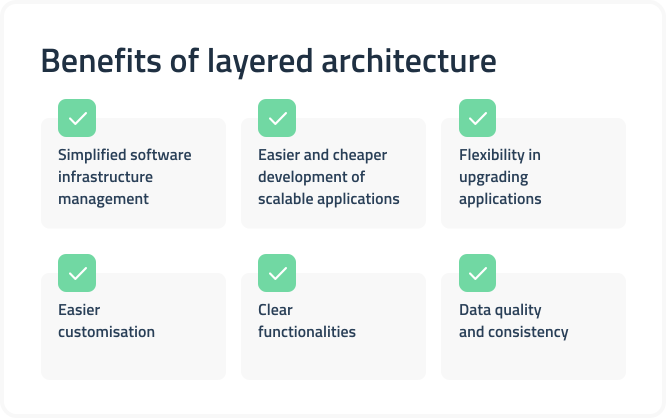
Layering is a fundamental technique in enterprise application architecture that simplifies complexity and enhances maintainability. This blog post explores its evolution, benefits, and challenges based on Martin Fowler's work.
Understanding Layering in Enterprise Application Architecture
In the realm of enterprise application architecture, layering is a fundamental technique that helps software designers manage complexity. Chapter 1 of Patterns of Enterprise Application Architecture by Martin Fowler explores the concept of layering, its evolution, and the benefits and challenges associated with it.
What is Layering?
Layering refers to the organization of a software system into distinct layers, each responsible for a specific aspect of the application. This model is akin to a cake where each layer serves a unique purpose, and higher layers depend on the services provided by lower layers. For instance, in a typical architecture, the presentation layer interacts with the domain layer, which in turn communicates with the data source layer.
The Evolution of Layers
The concept of layering has evolved significantly over the years. In the early days of batch systems, applications were often designed without a layered approach. However, with the rise of client-server systems in the 1990s, the separation of concerns became more pronounced, resulting in two-layer architectures where the client handled the user interface and the server managed data.
As the complexity of applications grew, particularly with the advent of web applications, the need for a three-layer architecture emerged: presentation, domain, and data source layers. This three-layer model allows for the encapsulation of business logic separate from both the user interface and the data access logic.
Benefits of Layering
- Simplicity of Understanding: Each layer can be understood independently, allowing developers to focus on one aspect of the application without needing to understand the entire system.
- Flexibility and Substitutability: Layers can be substituted or modified independently without affecting the entire system.
- Minimized Dependencies: Layering reduces the dependencies between different parts of the application, which facilitates easier maintenance and scalability.
- Standardization: Layers provide natural points for standardization in design and implementation.
- Reusability: Once a layer is built, it can often be reused across different parts of the application or even in different applications.
Challenges of Layering
- Cascading Changes: Changes in one layer may necessitate changes in others, which can lead to increased maintenance efforts.
- Performance Overhead: Additional layers can introduce performance overhead due to the need for data transformations between layers.
- Complexity in Layer Design: Determining what layers to include and what responsibilities each layer should have can be a complex decision.
Conclusion
Layering is a powerful architectural technique that helps manage the complexity of enterprise applications by organizing software into distinct layers with specific responsibilities. By understanding the principles of layering, developers can create more maintainable, scalable, and flexible applications. However, careful consideration must be given to layer design and the interdependencies between them to maximize the benefits while minimizing potential drawbacks.
Stay in the loop
Get notified when new posts are published. No spam, unsubscribe anytime.
No spam · Unsubscribe anytime