Reaction: Batch Processing Isn’t Dead—It’s Just Quietly Running the World
Batch processing doesn’t sound sexy.
Let’s address the elephant in the room:
Batch processing doesn’t sound sexy.
No real-time dashboards.
No flashy “live updates.”
No “AI-powered streaming pipeline” buzzwords.
And yet…
👉 Batch processing is still doing most of the heavy lifting behind the scenes.
Chapter 10 is a reminder that while everyone obsesses over real-time systems,
batch jobs are the ones actually getting things done.
🧠 The Core Idea
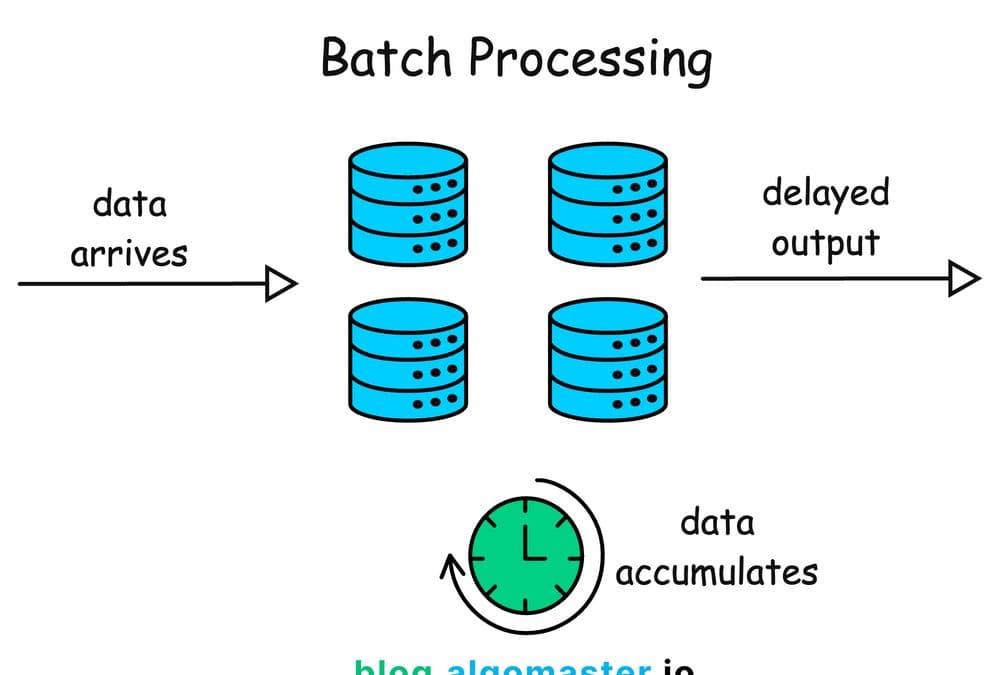
Batch processing is about:
👉 processing large volumes of data efficiently, not instantly
You:
collect data
process it later
produce results
No rush. No drama. Just results.
⏳ Why Batch Still Matters
Real-time systems are great… until they’re not.
They:
cost more
are harder to maintain
introduce complexity
Batch processing, on the other hand:
is predictable
easier to debug
handles massive data efficiently
Sometimes:
“fast enough” beats “real-time” every single time.
🧩 Batch vs Stream (The Ongoing Debate)
Streaming fans will say:
“Everything should be real-time.”
Batch systems respond:
“Relax. Do you really need it now?”
Batch Processing
high throughput
efficient
delayed results
Stream Processing
low latency
real-time updates
more complex
💡 Reality Check
Most systems don’t pick one.
They combine both:
👉 Lambda-ish architectures
batch → correctness
stream → freshness
Because:
users want fast and accurate
(Yes, they want everything. Of course they do.)
🗂 The Power of Immutable Data
One of the most underrated ideas in this chapter:
Treat data as immutable.
Instead of:
updating records
You:
append new records
Why this works:
easier debugging
safer reprocessing
reproducible results
Basically:
👉 logs > mutations
🔁 Reprocessing Is a Superpower
Batch systems shine because they can:
👉 recompute everything
Made a mistake?
fix the code
rerun the job
Try doing that in a real-time system without sweating.
🧠 MapReduce (The OG Workhorse)
Before all the fancy tools:
👉 there was MapReduce
Simple idea:
Map → process chunks of data
Reduce → aggregate results
It’s not glamorous, but it works.
And honestly?
A lot of modern systems are just:
👉 MapReduce with better marketing
⚙️ Dataflow Pipelines
Batch processing evolved into:
DAG-based pipelines
distributed jobs
fault-tolerant execution
Systems like:
Hadoop
Spark
They handle:
parallel processing
retries
failures
So you don’t have to babysit jobs at 3AM (hopefully).
🧨 Failure Handling (Where Batch Wins)
In batch systems:
failures are expected
jobs are retryable
results are reproducible
Compare that to real-time systems:
👉 where failures can corrupt live state
Batch is like:
“We’ll just rerun it.”
Simple. Effective. Underrated.
🧠 Locality Matters
Another subtle but important idea:
Move computation to data—not data to computation.
Why?
moving data is expensive
processing locally is faster
This is why distributed systems:
👉 schedule tasks near where data lives
😂 Brutal Truth Section
Let’s be honest:
Real-time systems get the hype
Batch systems get the paycheck
Your dashboards might be real-time…
but your analytics, reports, and ML pipelines?
👉 Batch all the way.
🧠 Final Takeaways
Batch processing is about throughput, not latency
It’s simpler, more reliable, and easier to debug
Immutable data + reprocessing = powerful combo
Most real systems use both batch and streaming
“Real-time everything” is often unnecessary overkill
🔥 The Big Idea
Batch processing is not outdated.
It’s the foundation that real-time systems stand on.
🚀 Closing Thought
Not everything needs to be instant.
Sometimes, the smartest system is the one that says:
“Let’s process this later—and do it right.”